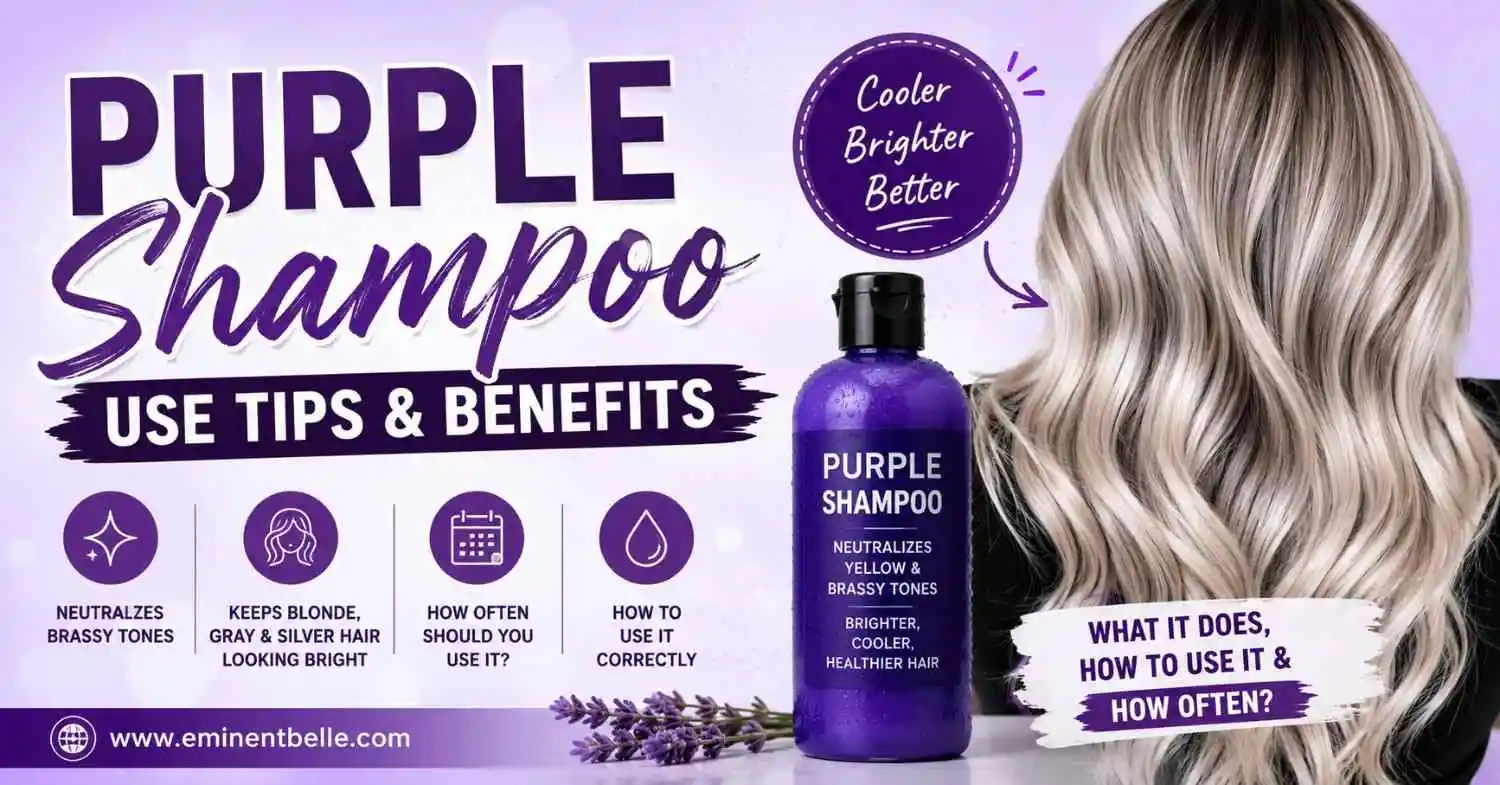
If blonde, silver, gray, or highlighted hair has started looking more yellow or brassy than you would like, purple shampoo can help bring it back toward a cooler, cleaner-looking tone. The trick is understanding what it actually does: purple shampoo is a toning product, not a bleach or hair-lightening treatment.
It works by depositing violet pigments onto the hair. Because purple sits opposite yellow on the color wheel, those pigments can visually neutralize unwanted yellow tones. This makes purple shampoo particularly useful for maintaining lightened hair between salon appointments.
But purple shampoo is not something most people need to use every time they wash their hair. How often you should use it depends on your hair color, how brassy it becomes, your hair's porosity, and the specific product you're using.
What Does Purple Shampoo Do?
Purple shampoo is designed primarily to neutralize unwanted yellow and brassy tones in light-colored or lightened hair.
When hair is bleached or otherwise lightened, warm underlying pigments can become visible. Over time, factors such as washing, heat styling, sunlight, chlorine, and mineral buildup can make those warm tones more noticeable. Purple shampoo deposits violet pigment that counteracts yellow, helping the hair look cooler and brighter.
Think of it as a temporary color-correction step rather than a permanent color treatment.
What will purple shampoo do to your hair?
Used correctly, purple shampoo can:
- Reduce visible yellow or golden tones
- Make blonde hair appear cooler and brighter
- Help maintain silver, gray, or white hair
- Refresh the tone of highlighted or balayaged hair
- Extend the appearance of a salon-toned color between appointments
It does not bleach or lighten the natural level of your hair. The effect comes from temporary pigment deposited on the hair rather than from removing the hair's existing color.
How Does Purple Shampoo Work?
The explanation comes down to basic color theory.
Purple and yellow are opposite each other on the traditional color wheel. When violet pigment is deposited onto hair that has unwanted yellow tones, the colors visually counteract one another.
That is why purple shampoo can make a yellow-looking blonde appear more neutral or cool. It doesn't literally remove the yellow pigment from the hair; instead, it adds a small amount of opposing pigment to change the overall appearance of the tone.
This also explains why choosing the right toning product matters. Purple is primarily useful against yellow. If the unwanted warmth is predominantly orange, a blue-based shampoo may be more appropriate because blue counteracts orange on the color wheel.
What Is Purple Shampoo Used For?
Purple shampoo is most commonly used by people with:
- Blonde hair
- Bleached or lightened hair
- Platinum or very light blonde hair
- Silver or gray hair
- White hair
- Brown hair with blonde or other lightened highlights
- Balayage or ombré with noticeable yellow tones
It is especially useful when the underlying hair is already light enough for yellow tones to be visible.
Natural dark hair generally has little reason to use purple shampoo unless it contains lighter sections that have developed unwanted yellow warmth.
How to Use Purple Shampoo
Using purple shampoo is fairly simple, but timing matters. A heavily pigmented formula left on porous blonde hair for too long can produce an overly cool, dull, or temporarily violet appearance.
Step 1: Wet your hair thoroughly
Start with completely wet hair. This helps distribute the shampoo more evenly.
Step 2: Apply the shampoo
Work the product through the areas that need toning most. For highlighted or balayaged hair, these are often the lighter mid-lengths and ends.
If your product is strongly pigmented, wearing gloves can help prevent temporary staining on your hands.
Step 3: Leave it on for the recommended time
Follow the instructions on the specific bottle rather than assuming that longer is better.
Some professional formulas recommend around three to five minutes, while other products may have different directions. If your hair is very light, porous, or damaged, starting with a shorter processing time is sensible because porous strands can absorb pigment more readily.
Step 4: Rinse thoroughly
Rinse the shampoo out completely and follow with conditioner.
Purple shampoo is primarily a toning cleanser, so keeping moisture in your routine is particularly helpful if your hair is bleached, dry, or otherwise processed.
How Often Should You Use Purple Shampoo?
There is no universal schedule that works for everyone.
For many people, once a week is a reasonable starting point. Some products recommend use one to three times weekly, while others are specifically intended for less frequent use. Your product's directions should take priority.
A useful approach is to start conservatively and adjust according to how your hair looks.
| Hair situation | Possible starting point |
|---|---|
| Light blonde with noticeable yellow tones | About once a week |
| Very light or porous blonde | Start less frequently or use for a shorter time |
| Silver, gray, or white hair | As needed to control yellowing |
| Subtle brunette highlights | Every week or every few weeks, depending on brassiness |
| Dark brown hair without highlights | Usually little benefit |
These are general guidelines rather than strict rules. A highly pigmented shampoo can produce a stronger effect than a milder formula, so two products labeled "purple shampoo" may need to be used differently.
Can you use purple shampoo every day?
For most people, there is little reason to use a strongly pigmented purple shampoo every day.
Overuse can leave hair looking dull or overly ashy, and porous hair may pick up enough violet pigment to develop a temporary purple or lavender cast. Excessive use can also contribute to dryness depending on the formula and the rest of your hair-care routine.
If you need frequent washing, a regular shampoo can generally handle most wash days, with purple shampoo used periodically when you actually see unwanted warmth.
What Does Purple Shampoo Do to Brown Hair?
Purple shampoo does not lighten brown hair. Its effect on brunette hair depends largely on whether the hair contains lighter, highlighted sections and which warm tones are showing.
For example, brown hair with blonde highlights, balayage, or other lightened pieces may develop yellow warmth. Purple shampoo can help those lighter areas look cooler.
Dark brown hair is different. When darker hair becomes brassy, the unwanted warmth may appear more orange or red rather than yellow. In that situation, purple shampoo may not be the most effective choice. Blue- or, depending on the tone, other color-correcting formulas may be more appropriate.
Purple vs. blue shampoo for brown hair
A simple rule is:
- Yellow warmth: purple shampoo
- Orange warmth: blue shampoo
- Red warmth: a different corrective tone may be needed
The exact choice depends on the starting color and the tone you are trying to neutralize. If you're unsure, a professional colorist can identify the underlying tone more accurately than a generic shampoo recommendation.
Can Purple Shampoo Make Hair Purple?
Yes, temporarily—particularly if the hair is very light, porous, damaged, or exposed to a highly pigmented formula for too long.
That doesn't mean purple shampoo is inherently damaging or that every use will turn hair violet. It means the pigment can become more noticeable when hair readily absorbs it.
If your hair starts looking lavender or unusually ashy, stop using the purple shampoo until the excess pigment fades and return to your normal cleansing routine. Reducing the frequency or shortening the application time can also help prevent the problem from recurring.
Does Purple Shampoo Replace Regular Shampoo?
Not necessarily.
Purple shampoo can cleanse the hair while depositing toning pigment, but it is generally best treated as a specialized part of a hair-care routine, rather than something everyone needs on every wash day.
You can alternate it with your regular shampoo and use it when brassiness becomes noticeable. Some formulas are designed for more frequent use, so check the manufacturer's directions for the product you have.
How to Get Better Results From Purple Shampoo
A few small adjustments can make toning more predictable.
Pay attention to the tone, not just the color
Don't choose purple shampoo simply because your hair looks "brassy." Look closely at what you see.
If the hair is yellow or golden, violet pigment may help. If it is distinctly orange, blue may be more effective.
Start with less time
If you're using a new product, don't assume you need the maximum recommended processing time. Start according to the label, and be especially cautious with very light or porous hair.
Focus on the areas that need toning
If only your highlights are turning yellow, you may not need to saturate every section of your hair equally.
Condition afterward
Lightened hair can already be more vulnerable to dryness. Following a toning shampoo with conditioner can help keep the hair feeling soft.
Don't expect it to fix every color problem
Purple shampoo is a maintenance product. It can help counteract certain unwanted tones, but it won't replace bleaching, permanent color, or a professional toner when a substantial color correction is needed.
When Purple Shampoo Isn't the Right Choice
Purple shampoo isn't a universal solution for every warm hair color.
It may be ineffective if:
- Your hair is too dark for the purple pigment to have a noticeable visual effect.
- The unwanted tone is predominantly orange rather than yellow.
- You're trying to make your hair physically lighter.
- You want a permanent color change.
- The underlying color needs professional correction rather than surface toning.
For significantly uneven or unwanted color, seeing a qualified colorist is often more useful than repeatedly increasing the amount or frequency of purple shampoo.
Frequently Asked Questions
What does purple shampoo do?
Purple shampoo deposits violet pigment that helps neutralize unwanted yellow tones. It is commonly used to maintain cooler-looking blonde, silver, gray, white, and highlighted hair.
How often should you use purple shampoo?
Once a week is a common starting point, but the ideal frequency varies. Some formulas can be used one to three times a week, while others are intended for less frequent use. Always follow the instructions for your particular product.
What does purple shampoo do to brown hair?
It can help neutralize yellow tones in lighter sections of brown hair, such as blonde highlights or balayage. It generally won't significantly change dark, unlightened brown hair. If the unwanted warmth is orange, blue shampoo may be a better option.
Can purple shampoo lighten hair?
No. Purple shampoo does not bleach or lift the hair. It deposits temporary pigment that can make already-light hair appear cooler and brighter.
Can you use purple shampoo every day?
You generally don't need to. Frequent use of a strongly pigmented formula can cause excessive toning and may leave porous hair looking violet or dull. Use it according to the product instructions and your hair's needs.
How long should you leave purple shampoo on?
Follow the product label. Some formulas recommend around three to five minutes, but the correct timing varies by formula and hair type. Very light or porous hair may need less exposure to avoid over-toning.
Conclusion
Purple shampoo is best understood as a temporary toning tool for unwanted yellow warmth. It can help blonde, silver, gray, white, and highlighted hair maintain a cooler appearance between color treatments, but it doesn't lighten the hair or permanently change its color.
For most people, using it occasionally—often around once a week—is a better starting point than reaching for it every day. Pay attention to the actual tone of your hair, follow the product's instructions, and remember that purple works best against yellow. If the brassiness is orange, a blue-based product may be the more suitable choice.
Used with that distinction in mind, purple shampoo can be a simple way to keep lightened hair looking more balanced without turning every wash into a toning session.
 Beauty